When Did Energy Become Something We Babysit?

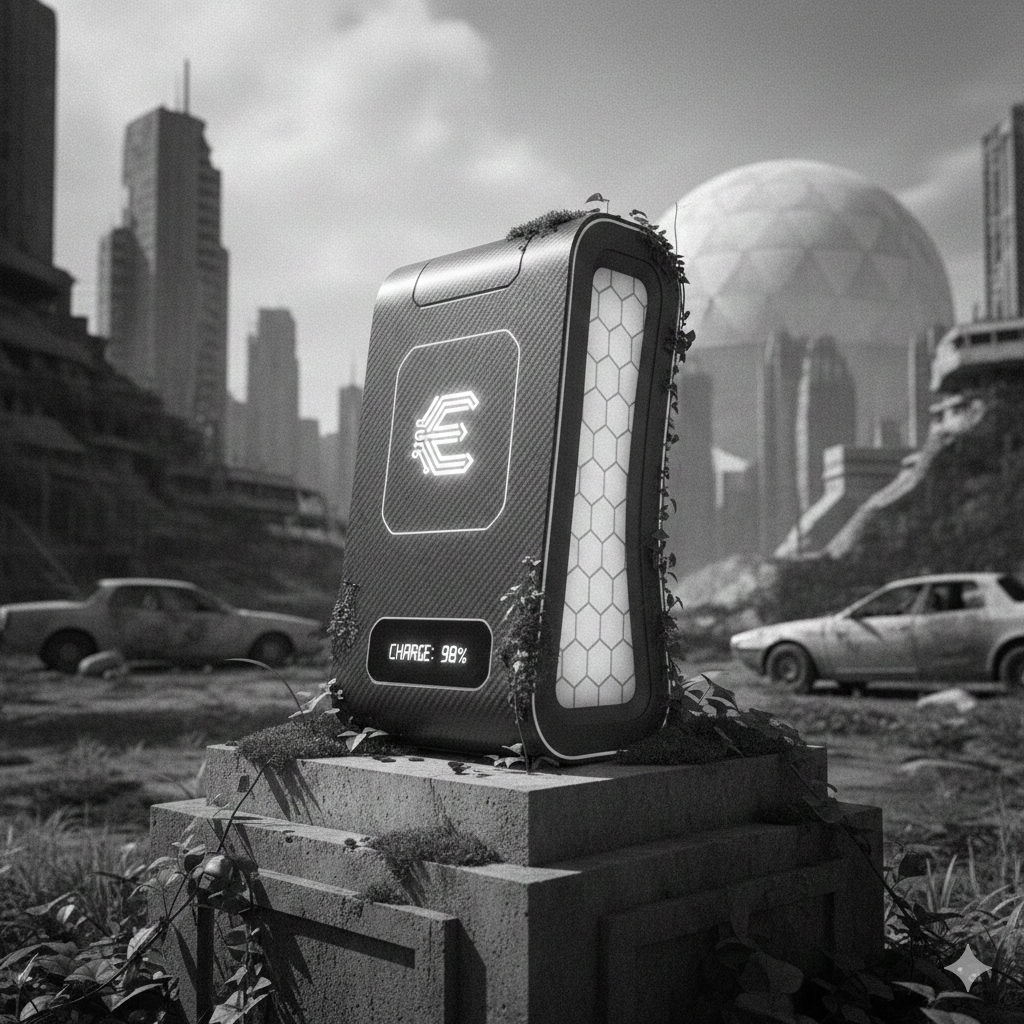
Check your phone battery.
Now think about how often you do that.
Portable energy has quietly trained us to live with anxiety. Percentages. Power-saving modes. Cables in every bag. Outlets mapped mentally in cafés and airports. For all our technological progress, modern mobility still depends on a ritual that would feel familiar to someone from the 1990s: charge, wait, repeat.
Batteries are not a failure. They are, in fact, a triumph of engineering—scalable, predictable, and endlessly optimized. They made the mobile world possible. But their very success may have frozen our imagination. We stopped asking what portable energy could be, and focused instead on making the same idea slightly better every year.
What if that’s the limitation?
What if energy didn’t feel like a resource you carried, but a condition you moved through?
Imagine devices that never quite “run out,” because they’re always borrowing a little from their surroundings. Light through a window. Heat from your body. Motion from your steps. Signals already saturating the air. Today, these ideas power tiny sensors and niche gadgets. Tomorrow, they might quietly dissolve the concept of charging altogether—not with a breakthrough, but with a thousand small efficiencies adding up to freedom.
Or imagine portable energy that behaves less like a tank and more like a match. Not stored indefinitely, but generated instantly when needed. Refueled, not recharged. Chemical energy converted on demand, with no waiting, no wall socket, no overnight rituals. The appeal isn’t speed—it’s psychology. The difference between worrying about depletion and trusting availability.
And then there’s the more unsettling thought: what if “portable” energy stops being portable at all?
If rooms, vehicles, streets, and public spaces begin to emit low-level power the way they now emit Wi-Fi, then carrying energy becomes unnecessary. Devices don’t store much; they assume presence. Energy becomes part of the environment, like air or gravity. Invisible. Expected. Unremarkable.
None of this replaces batteries tomorrow. They will remain, improving quietly, doing what they do well. But history suggests that dominant technologies rarely disappear—they fade into the background as something more ambient takes their place.
The future of portable energy may not look like a new object in your hand. It may feel like the absence of a habit. No charger packed. No outlet searched for. No moment where your tools simply… stop.
At that point, we may look back at battery anxiety the way we now look back at dial-up tones—nostalgic, awkward, and strangely intimate.
And the question won’t be how much power do you have left?
It will be why did we ever think energy had to run out in the first place?